

Can Vacuum Sealer Bags Really Extend Food Shelf Life? Vacuum Sealer Bag Preservation Effectiveness Test and Usage Tips
Release time: 2025-12-06
Table of Contents
In modern households, food preservation has become an indispensable topic. With technological advancements, vacuum sealer bags have gradually become an essential helper in the kitchen. These bags isolate food from oxygen through vacuum sealing, thus extending their shelf life. So, to what extent can vacuum sealer bags extend the shelf life of food? We will answer this question through a preservation effectiveness test and usage tips.
How Vacuum Sealer Bags Work
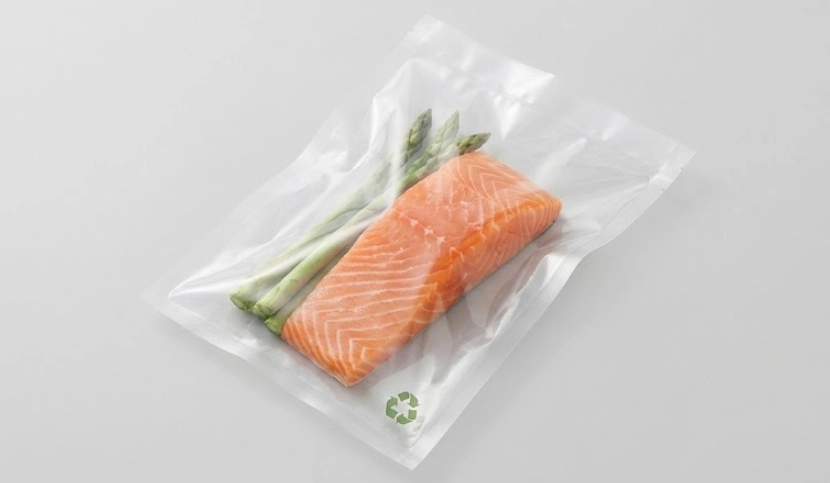
The working principle of vacuum sealer bags is very simple. First, a vacuum sealer machine is used to extract the air, creating a vacuum inside the bag, thus isolating the food from oxygen. Oxygen in the air is one of the main factors causing food spoilage; therefore, removing oxygen effectively extends the shelf life of food. In addition, the sealed design of vacuum sealer bags prevents the entry of external moisture, odors, and bacteria, further enhancing the preservation effect.
Can Vacuum Sealer Bags Extend Food Shelf Life?
The use of food-grade vacuum sealer bags can significantly extend the shelf life of food, especially when storing perishable foods such as meat, seafood, and fruits and vegetables. Through vacuum packaging, food can stay fresh for a longer time, delaying the spoilage process. Depending on the characteristics of different foods, the effect of vacuum sealer bags on extending shelf life is as follows:
Meat and Seafood: Meat and seafood are high-risk, perishable foods. Typically, meat can be stored in the refrigerator for about 3-5 days, but after packaging with a vacuum sealer bag, the shelf life can be extended to 1-2 weeks, or even longer.
Vegetables and Fruits: Vegetables and fruits contain a lot of water, so they are prone to mold or softening. After packaging with durable vacuum sealer bags, the spoilage process can be effectively delayed, especially under refrigeration conditions, extending the shelf life by 3-5 days.
Dried Goods and Nuts: For dried goods and nuts, vacuum sealer bags not only isolate oxygen and prevent moisture absorption, but also prevent oil oxidation, thus maintaining their original flavor and texture. Tips for Using Vacuum Sealing Bags
To maximize the preservation effect of vacuum sealing bags, correct usage is crucial. Here are some practical tips:
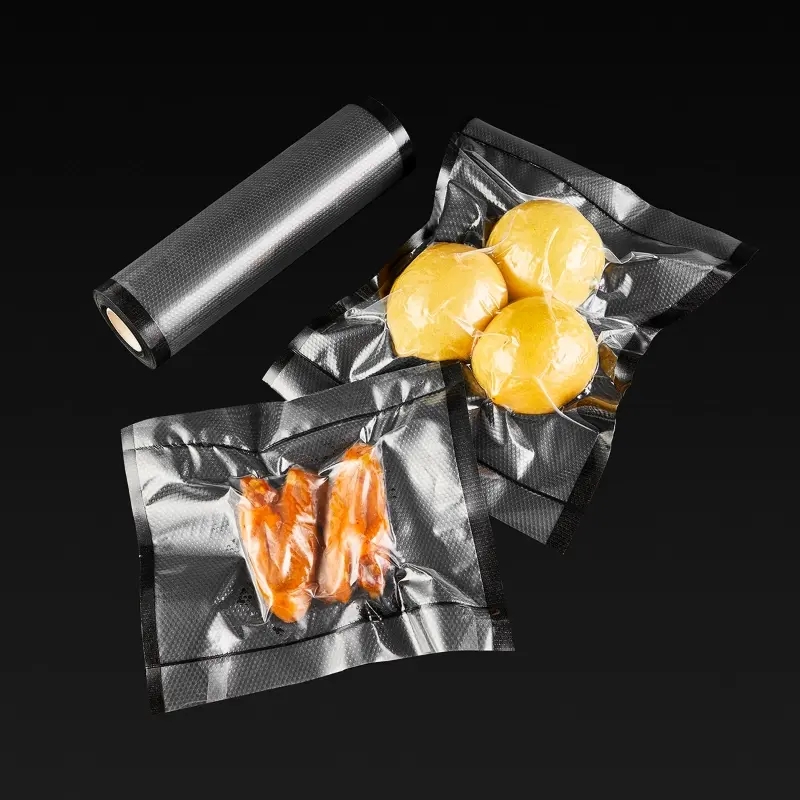
Choose the right vacuum sealing bags: Choosing food-grade vacuum sealing bags is very important to ensure that food is not contaminated by harmful substances during storage. Also, choose bags of appropriate thickness and material according to the different needs of the food to ensure durability and sealing effectiveness.
Prepare food before vacuum sealing: Before using vacuum sealing bags, try to dry the surface moisture of the food to prevent moisture from affecting the sealing effect. For larger pieces of food, you can appropriately divide them into smaller portions for storage, which improves preservation and makes them easier to use later.
Correctly use a vacuum sealer: Using a durable vacuum sealer is key to ensuring preservation. Ensure the equipment is in normal working condition and set the appropriate vacuum level for different foods. For more delicate foods, you can choose a light vacuum mode to prevent the food from being crushed.
Mark the storage date on the food: When storing food in vacuum sealing bags, it’s best to mark the storage date on the bag. This allows you to more clearly understand the storage time of the food and avoid the health risks of expired food.
Advantages and Limitations of Vacuum Sealing Bags
The advantages of vacuum sealing bags lie in their efficient preservation function and convenient user experience. They can extend the shelf life of food, reduce waste, and help families save money. However, vacuum sealing bags are not suitable for all foods. For example, for some vegetables (such as leafy greens), vacuum packaging may cause them to lose their original crispness, so these bags are not suitable for packaging such foods.
Furthermore, vacuum sealing bags do not equate to “permanent preservation” of food; they only slow down the spoilage process and still require storage in appropriate conditions, such as low-temperature storage.
Conclusion
In summary, vacuum sealing bags can significantly extend the shelf life of food, especially meat, seafood, and dried goods. By choosing suitable vacuum sealing bags, correctly using a vacuum sealer, and employing some simple storage techniques, you can maximize the preservation effect of your food and reduce food waste. If you want to provide longer-term preservation for your food, consider using high-quality, durable vacuum sealer bags to make your kitchen life more efficient and convenient. Through this article, we believe you now have a clearer understanding of the use and effectiveness of vacuum-sealed food bags. Choosing the right vacuum-sealed bags can not only extend the shelf life of food but also help you achieve more efficient kitchen management.